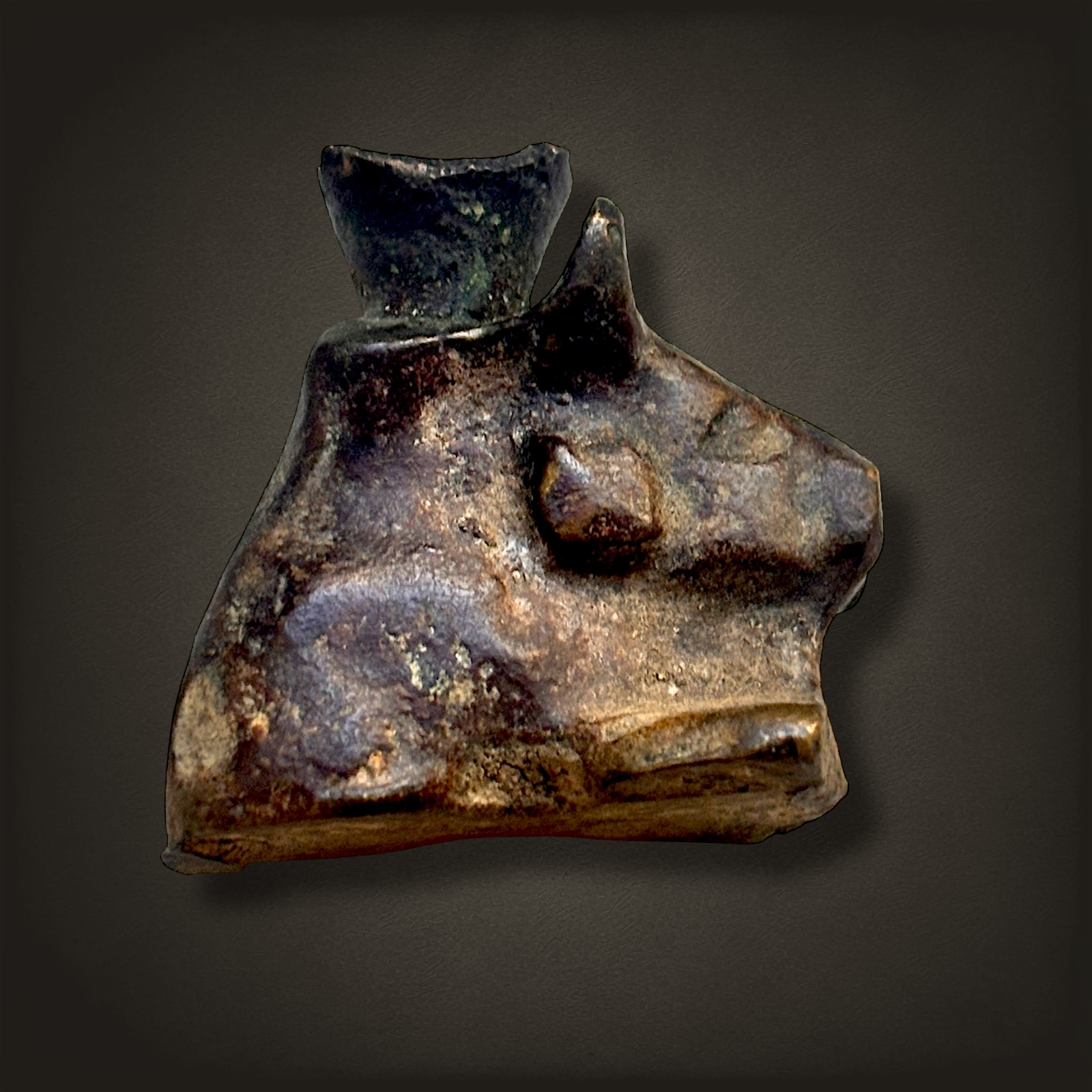
Urartian Bronze Bull
Urartian Bronze Bull A beautiful piece of history, this fragment likely from the 8th century BC. More than likley this was part of some small bronze bull figure or statue. In Urartu, the bull symbolized divine power, especially for the storm and war god Teisheba (also spelled Theispas), but also strength and fertility generally. It was a key figure in religious art, with gods depicted standing on bulls, a prominent part of the economy as a food source and agricultural tool, and an essential symbol in rituals and the overall spiritual life of the kingdom. Religious Symbolism: Association with Teisheba: The bull was the symbol of Teisheba, the Urartian storm and war god. Depiction of Gods: Gods, like Teisheba, were often depicted standing on a winged bull, signifying their connection to the sky and divine power. Sacred Animal: Bulls were included in sacrifice lists for various gods, including Haldi, the chief deity, and were considered an important sacred animal. Practical and Economic Significance: Agriculture: Bulls were essential for plowing agricultural lands in the limited farming areas of the Urartian kingdom. Food Source: As a highly significant animal in the local economy, bulls were raised in herds and served as a major food source. Artistic and Cultural Context: Bronze Artifacts: The Urartians created intricate bronze objects, such as large cauldrons, to which bull head attachments were added. Motif of Power: Recurring motifs of lions and bulls in art, particularly on fortress walls, symbolized courage, power, and fertility, conveying messages of strength and divine favor. Overall Importance: The bull was a central and respected animal, embodying both abstract and concrete qualities that enhanced its sacred status in Urartian society. The image depicts mytical wing creatures, these sytlized figures are with mytological, deities or royal scenes. The pieces is either Assyrian or Urartian. While many know of the Assyrians the Urartian kingdom was a civilization around Lake Van in eastern Anatolia (modern Turkey) Provenance: Private Dutch collection. Enquire Now
Related Products