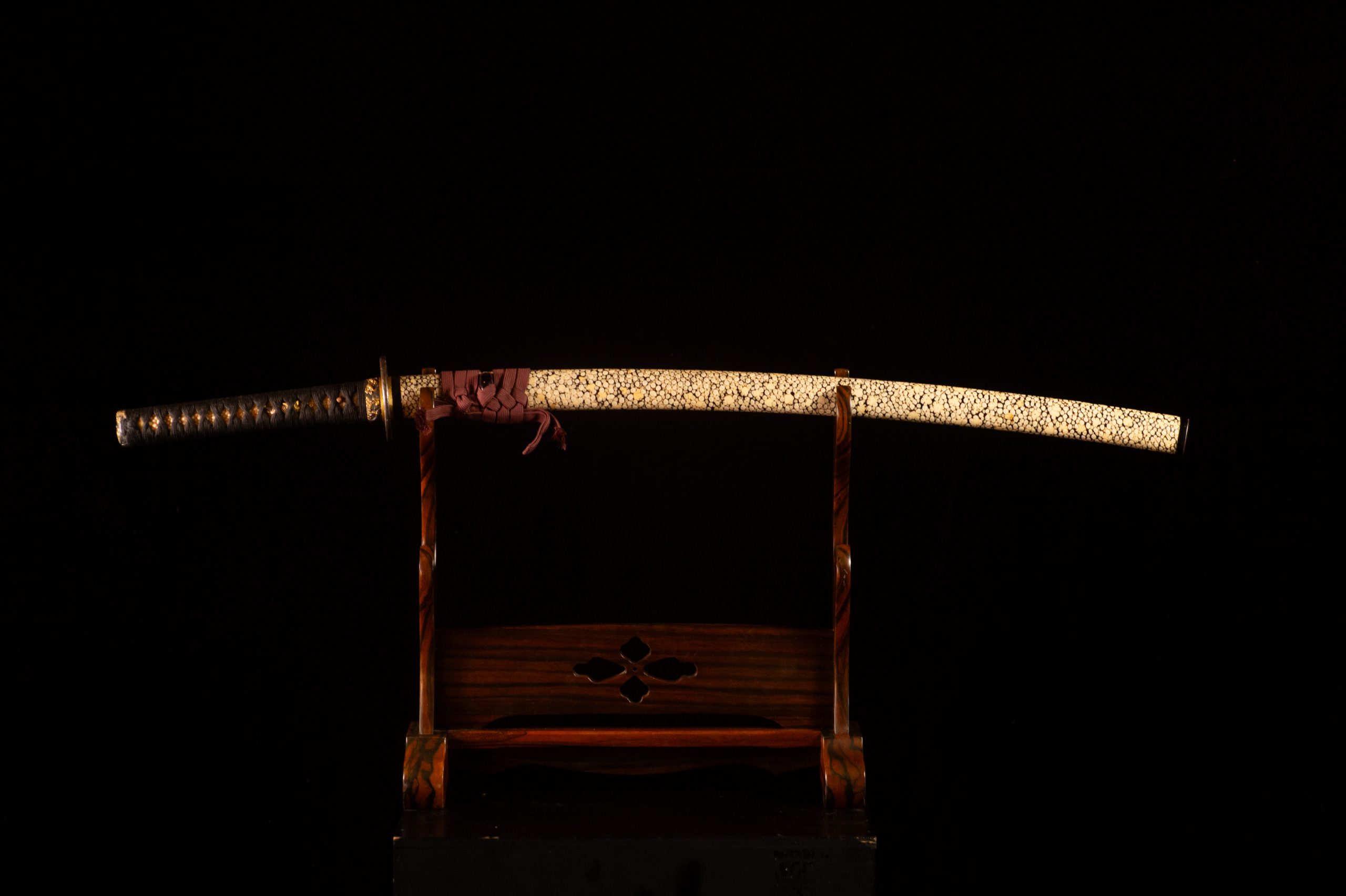
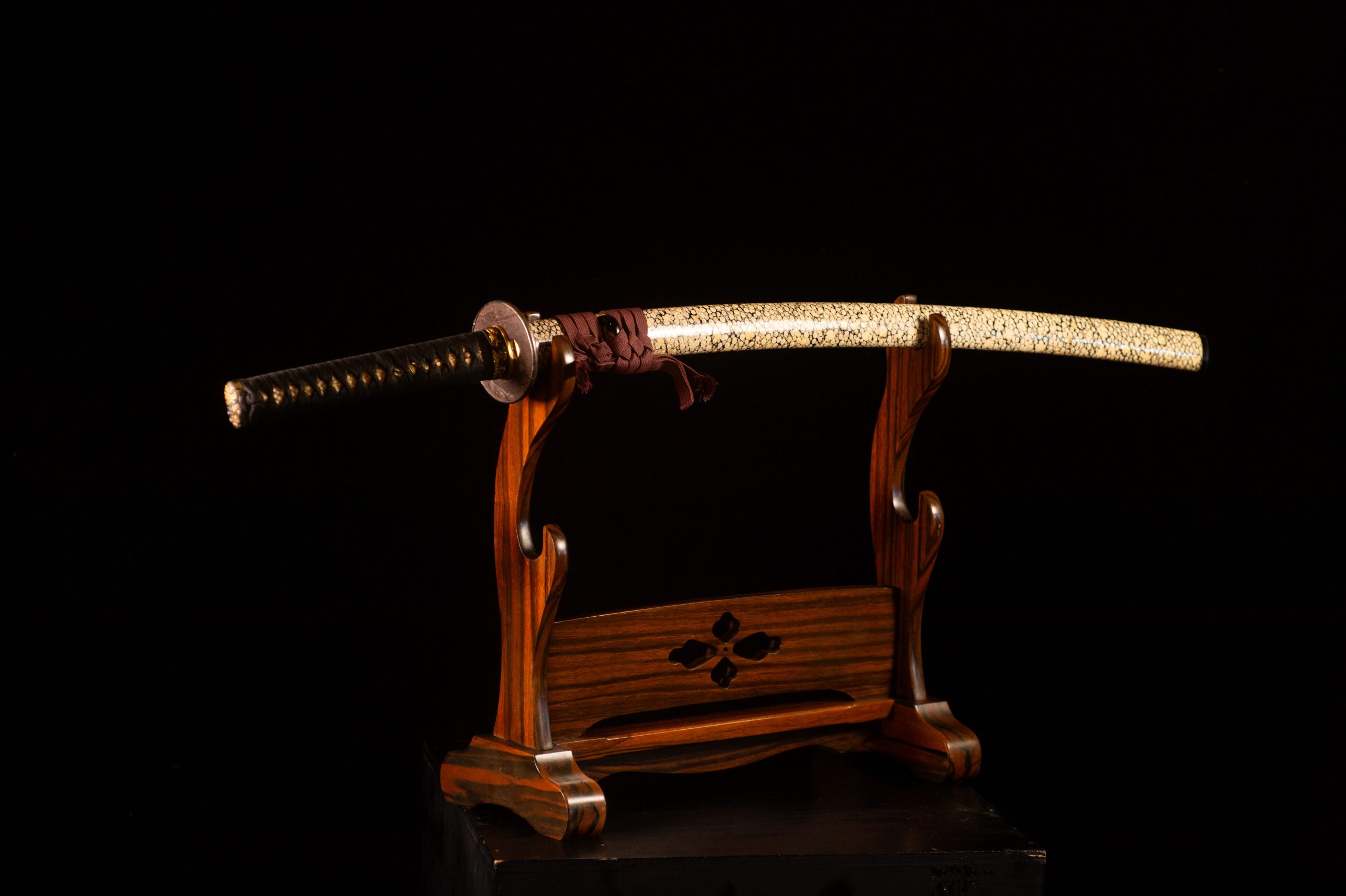
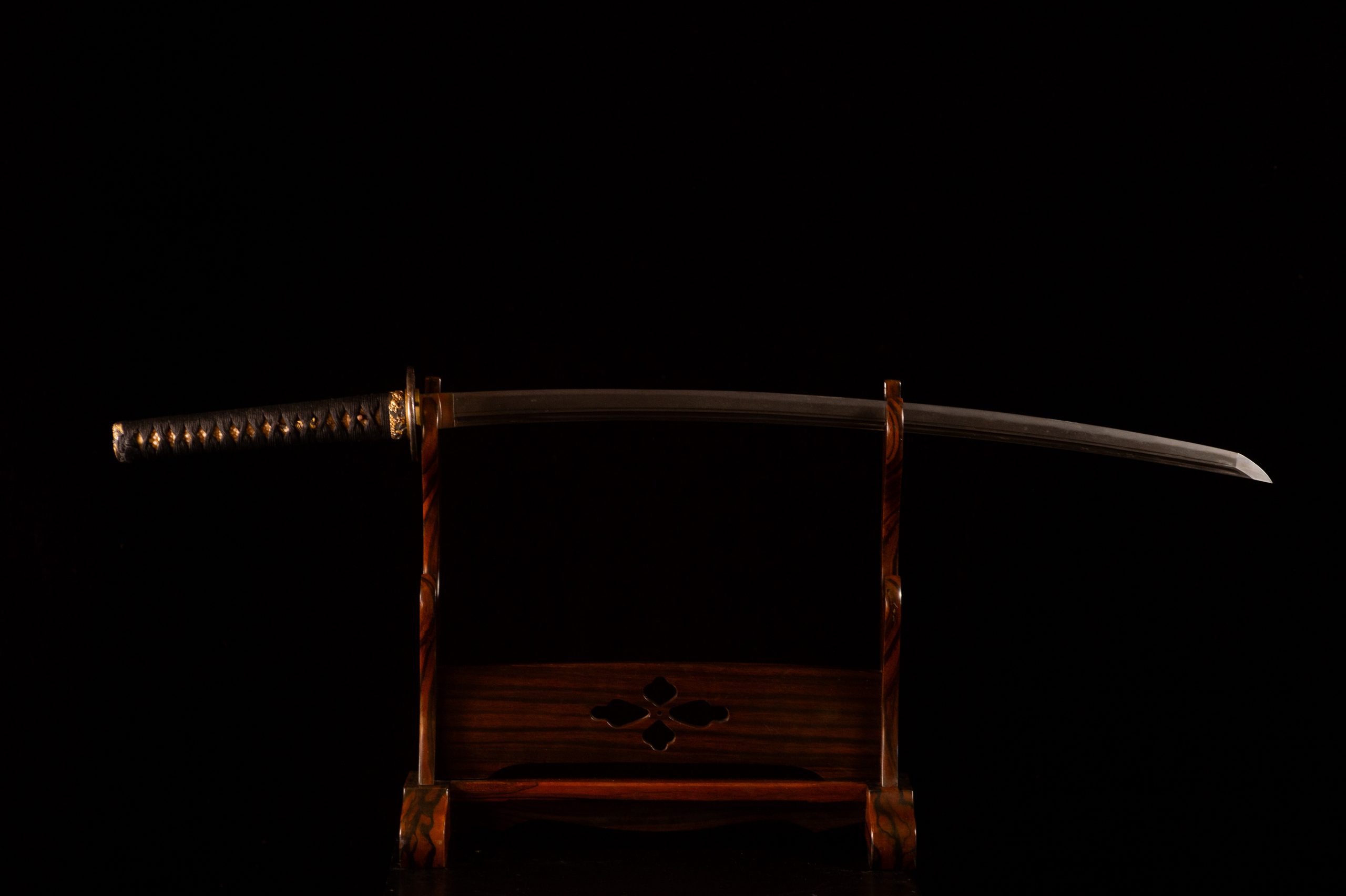
Nihonto Katana “Osafune Katsumitsu” in koshirae
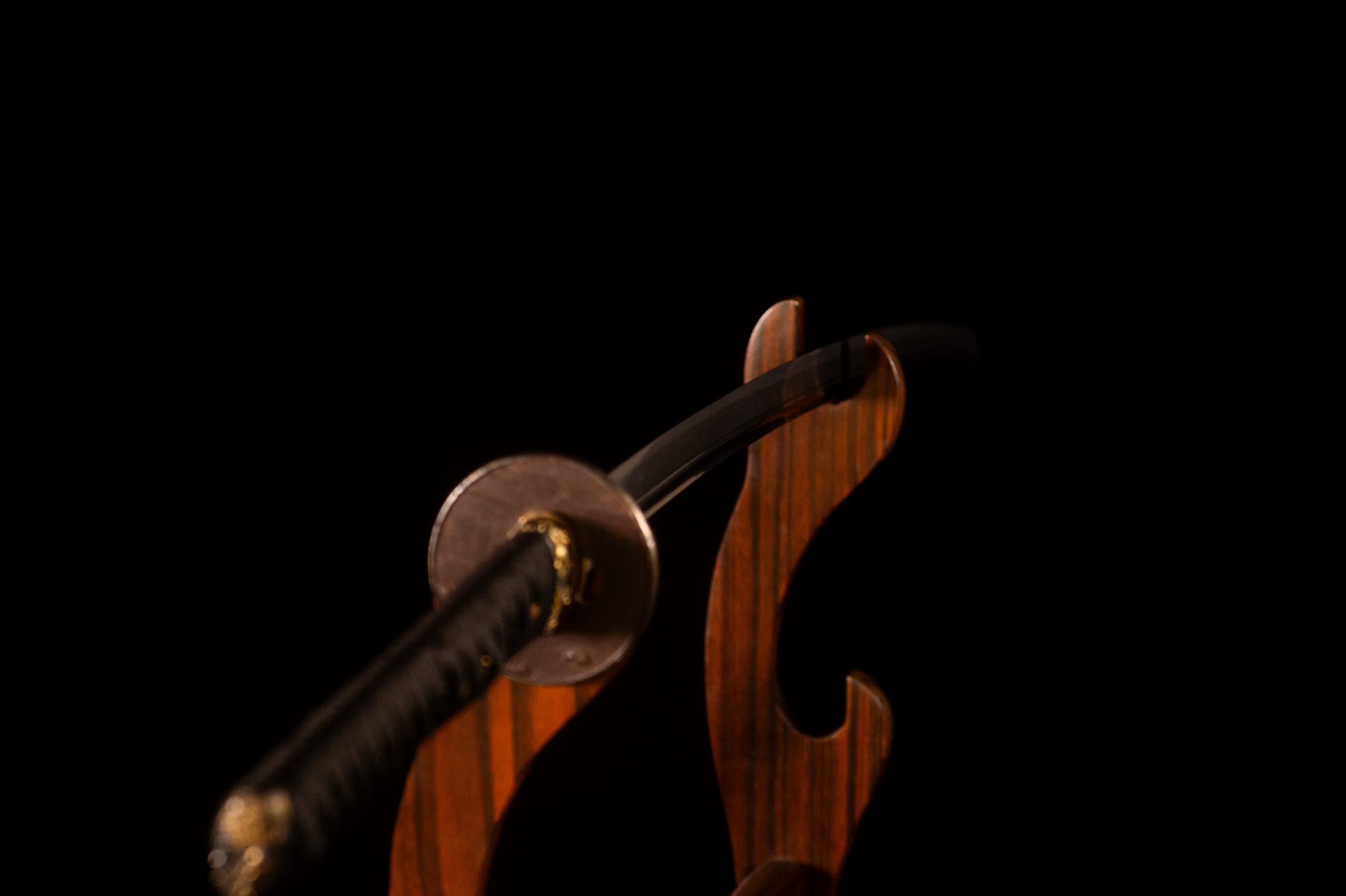
Description ITEM DESCRIPTION: Comes with kimono or cotton bag. Comes with certificate of supein Nihonto. Comes with copy of Tokosusho. Documentation Documentation (Tokorusho) 銃砲刀剣類登録証 Firearms and Swords Registration Certificate. 登録記号番号 第二六三二号 Registration number: No. 2632. 種別 刀 Type: Katana. 長さ 二尺二寸一分 Blade length (nagasa): 2 shaku 2 sun 1 bu Approx. 66.9 cm. 反り 五分 Curvature (sori): 5 bu Approx. 1.5 cm. 目くぎ穴 一 One mekugi-ana. 銘文 備州長船勝光作 Recorded inscription: “Bishū Osafune Katsumitsu saku” Translation: “Made by Katsumitsu of Osafune, Bizen Province.” 昭和廿六年三月三十日発行 Issued March 30, Shōwa 26 (1951). Smith, school, and period The registered mei reads Bishū Osafune Katsumitsu saku. Several swordsmiths used the name Katsumitsu. Historically, the most renowned belong to the Sue-Bizen tradition of the late Muromachi period (15th–16th century). Documented Katsumitsu worked roughly between 1460–1500, during pre-Sengoku military production. Technical description of the blade The blade measures 66.9 cm in nagasa and displays elegant, controlled proportions. The actual curvature is approximately 1.7–1.8 cm, visually evident and harmonious. The sori is evenly distributed and centered. Geometry: Well-defined shinogi Clean, refined silhouette Medium-sized kissaki (chū-kissaki) Smooth transition into the monouchi The hamon appears nioi-based with gentle notare tendencies and restrained gunome undulation. The temper line is continuous and technically consistent. The nakago shows stable dark patina, one mekugi-ana, and a profile coherent with koto forms. The mei is officially recorded on the torokusho. Technical description of the koshirae The mounting is visually strong and artistically significant. Saya Full samegawa-covered saya (samegawa-zaya) with prominent nodes and organic contrast. Tsuka Black tsuka-ito over samegawa, properly tensioned. Fuchi-kashira Clearly in Sōten (Hikone-bori) style, mid-Edo period. Material: shakudō Decoration: relief work with gold inlays and applied details. The fuchi depicts a tiger in dynamic relief, sculpted with volume and contrast characteristic of Sōten narrative compositions. The kashira shows a courtly and scholarly scene, with figures in layered composition and detailed garments, typical of mid-Edo Sōten school aesthetics. Relief depth and contrast between shakudō ground and gilt highlights align fully with Edo Sōten production. Tsuba Round tsuba with restrained incised lines, visually balancing the richness of the fuchi-kashira. Technical conclusion Katana officially registered in Japan in 1951, signed Bishū Osafune Katsumitsu saku. Morphologically consistent with late muromachi production, displaying balanced koto proportions and curvature around 1.8 cm. The Sōten-style shakudō fuchi-kashira with tiger and courtly scholarly motifs situates the mounting firmly within the same mid-Edo artistic framework. A coherent and aesthetically balanced piece combining disciplined Muromachi blade workmanship with expressive Edo narrative fittings. Relacionado